
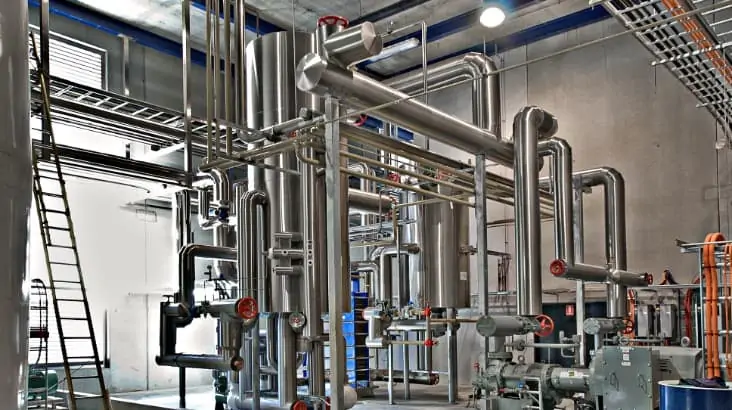
TLDR:
- Polyurethane foam wins where moisture is the real threat, such as chilled lines, cryogenic pipework, tanks, vessels, and cold stores, because its closed cell structure gives water nowhere to travel
- It's not the right call everywhere. High-temperature lines and strict fire-rating applications are better served by mineral wool or calcium silicate
- Installation quality matters more than the material spec itself. A poorly sealed joint or gap in the vapour barrier lets moisture in, and once it's under a closed cell system it can travel and cause damage well beyond that point
- The real payback shows up as fewer replacement cycles and lower energy consumption over the asset's life, not on the install invoice
What polyurethane foam insulation actually does
Closed cell polyurethane insulation works by trapping gas inside a rigid foam cell structure. That structure gives it superior thermal resistance compared with most other insulation materials at the same thickness, along with genuine resistance to moisture ingress. Water is the enemy of almost every insulation failure on industrial sites, and closed cell foam simply does not give it anywhere to travel. That is a large part of why polyurethane spray foam insulation has become one of the more widely specified industrial foam insulation options across Australia and beyond.
For industrial facilities, that combination matters more than the R value on a data sheet. Polyurethane foam holds its shape and density under mechanical stress, and it does not sag or compress over time the way some fibrous insulation materials do. It also adheres directly to pipe, duct, or vessel surfaces, which reduces the air gaps that cause energy loss in the first place. Manufacturers and suppliers offer the material in flexible and rigid foam formulations, at a range of densities and thicknesses. That range lets an installer match the specification to the application, whether the job is industrial, commercial, or residential in scale. None of that makes it the right choice everywhere. It makes it the right choice in specific conditions, and that is what the rest of this guide covers.
The applications where it outperforms other insulation materials
Cold and chilled process lines
Chilled water lines, refrigerant pipework, and process lines running below ambient temperature are where polyurethane foam insulation earns its reputation. The closed cell structure stops condensation forming on the pipe surface, which is the failure mode that eventually corrodes pipework and soaks surrounding insulation from the inside out. On a chilled line, moisture-open insulation is not just underperforming. It is actively causing the problem it was installed to prevent. Insulation specified to prevent condensation and stop moisture ingress is treated as a design requirement rather than a bonus feature on these industrial applications. This is the same closed cell principle that has made polyurethane foam a marine buoyancy material for decades.
Below-ambient and cryogenic pipework
For lines running well below ambient, including cryogenic and process refrigeration applications, the vapour barrier integrity of the insulation system determines whether it lasts five years or fifteen. Polyurethane foam’s closed cell structure gives it a natural advantage at these temperatures. The outcome, though, depends almost entirely on installation quality. That means how the joints are sealed, how the vapour barrier is maintained at penetrations and supports, and whether the cladding protecting the foam is fitted correctly.
Tanks, vessels, and cold stores
Spray-applied or panel-fitted polyurethane insulation is common on tanks, vessels, and cold store panels because it can follow complex geometry without the seams and gaps that come with rigid foam board insulation on curved or irregular surfaces. For cold stores specifically, the airtightness of a well-installed foam system does double duty. It holds the thermal performance and it keeps moisture out of the wall and ceiling cavity, which is where most cold store insulation failures actually start.
Ducting and sheet metal enclosures
On ducting and sheet metal enclosures, polyurethane foam’s adhesion and rigidity mean it can be installed as part of a combined insulation and cladding system, rather than two separate trades working around each other. This applies equally to walls, roofs, and enclosure panels in commercial buildings and industrial plants alike. Beyond thermal insulation performance, the same foam offers a genuine degree of sound insulation. It is not a substitute for a purpose-built acoustic insulation product on a dedicated noise-control job, but the acoustic benefit is a welcome side effect on process ducting where both heat and noise are present. This is one of many applications where a single, correctly specified material can insulate against more than one problem at once. That matters on a live site where sequencing and access are tight, and it is an area where having both insulation and sheet metal fabrication capability under one contractor removes a coordination problem most facilities do not realise they have until it costs them a week.
Where polyurethane foam is not the right choice
A page that only tells you where a product wins is not giving the full picture, so here is where a different material, or a different formulation of foam insulation, is usually the better call.
High-temperature applications are the clearest case. Polyurethane foam has a temperature ceiling, and pushing it past that limit degrades the material and voids the performance it was specified for. For high-temperature process lines, mineral wool or calcium silicate systems are the better fit, since they are designed for those specifications from the outset.
Applications with high fire risk or strict fire rating requirements also need careful thought. Polyurethane foam’s fire resistant properties vary significantly depending on the product and facing used. On sites with strict fire safety obligations, a fire-rated mineral wool system is often the safer specification.
Where there is frequent mechanical access to pipework, such as lines needing regular inspection, valve maintenance, or rework, a removable insulation jacket system is worth considering instead. Over the life of the asset, it can end up cheaper than a spray-applied foam system that has to be cut and reinstated every time someone needs to get in. This is one of the reasons an experienced insulation contractor will sometimes recommend against the product they supply most often, because the fit matters more than the sale. Knowing when not to use a material is one of the essential benefits of working with a specialist who can fill that gap with the right alternative, rather than a supplier who only stocks one answer.
The cost and performance payback facilities actually see
Industrial insulation is judged on total cost over the life of the asset, not the install invoice. Polyurethane foam’s moisture resistance means fewer replacement cycles caused by wet insulation losing its thermal resistance, which is the single biggest hidden cost in industrial insulation and rarely shows up on a maintenance budget until the pipe underneath has already started corroding.
Energy performance is the other side of the equation. A well-installed polyurethane foam system on chilled or refrigerated lines reduces the heat gain the system has to fight against continuously. That reduction in energy consumption shows up directly on the energy bill for that plant or process, generally within a payback period short enough to justify the specification on its own. Replacing degraded material with a correctly specified polyurethane system is one of the more reliable ways to improve energy efficiency without touching the equipment itself.
Installation standards that determine whether it performs
Polyurethane foam is a forgiving material to work with and an unforgiving material to get wrong. Thermal and moisture performance depends on correct thickness for the application, properly sealed joints and penetrations, and a vapour barrier that is actually continuous rather than technically present. A gap at a pipe support or a poorly sealed joint does not just reduce performance at that point. It gives moisture a way in, and once moisture gets under a closed cell system, it can travel and cause damage well beyond the original entry point before anyone notices.
This is also where compliance matters. Industrial insulation work in Australia and New Zealand needs to meet the relevant Australian standards for the application. On tender-based projects, documentation of that compliance is often what separates a passed inspection from a costly rework. Handling the chemicals and materials involved correctly during application matters too, both for the safety of the installation crew and for the finished performance of the foam. This is one of the advantages of using experienced contractors over a supplier who treats installation as an afterthought to the product sale.
How Total Insulation approaches polyurethane foam projects
Total Insulation has supplied and installed polyurethane insulation across industrial and commercial applications since 2002. Our approach starts with the same question every time, ‘what this line, tank, or enclosure is actually going to be exposed to over its service life’, not just what temperature it runs at today. We assess process temperatures, moisture exposure, mechanical access requirements, and fire safety obligations together before specifying a system. Where cladding is needed to protect the foam from mechanical damage, UV, and dust, our in-house sheet metal fabrication capability means that work is sequenced and delivered as part of the same project rather than handed off to a second contractor.
We work to Australian standards across every project, and our documentation reflects the standard actually being targeted for that application. If you are still weighing up whether polyurethane foam insulation is the right specification for your facility, our team is glad to talk through the application directly.
Frequently asked questions
Yes, provided it is protected with appropriate cladding or jacketing. Unprotected foam degrades from UV exposure and mechanical damage, which is why outdoor pipework and vessels are almost always finished with a metal or PVC cladding system over the top.
Polyurethane foam generally offers better thermal resistance per millimetre of thickness and superior moisture resistance, which makes it well suited to below-ambient applications. Mineral wool handles higher temperatures and offers better fire resistant properties, which makes it the better fit for hot process lines and fire-rated applications.
Modern polyurethane spray foam systems are formulated without ozone-depleting blowing agents, and the energy savings a correctly specified system delivers over its service life generally outweigh the environmental cost of the material itself, particularly on long-running industrial equipment.
With correct installation and cladding protection, a well-specified polyurethane foam system can perform reliably for well over a decade. Service life drops sharply if moisture gets into the system, which is why installation quality matters more than the material specification itself.
